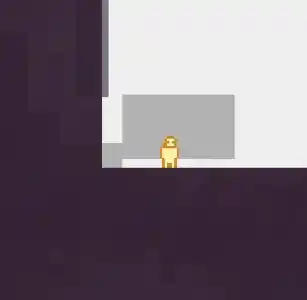





















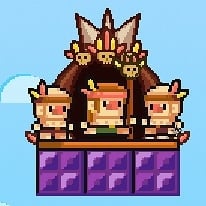










Plonky is a chaotic, ragdoll-physics puzzle platformer that prioritizes creative problem solving and gleeful unpredictability over precise twitch movement. The floppy protagonist and an assortment of mechanical contraptions — carts, pulleys, levers, spinning saws, crushing machines, and swinging platforms — turn each level into a short, often hilarious experiment. If you prefer puzzles that reward clever use of the environment rather than pixel-perfect jumps, Plonky delivers a distinctive mix of challenge and comedy where small chain reactions often feel like earned victories.
How the gameplay loop works
The core loop is simple: face a contraption-filled challenge, work out how the set pieces interact, and guide the ragdoll through the hazard-strewn exit. Levels present a compact set of mechanics — movable carts, switches, pulleys, and dynamic obstacles — and expect you to combine them. Because the character is governed by floppy ragdoll physics, solutions come from experimenting with momentum, timing, and collisions rather than executing pixel-perfect jumps. Expect to observe, try, fail, and adjust your approach; failed runs frequently reveal how objects move or when a timing window opens.
Desktop controls
Plonky supports straightforward keyboard input on desktop. Verified controls are:
- Move Left / Right: A / D or Left / Right Arrow keys
- Jump: W, Up Arrow, or Space bar
- Climb Down: S or Down Arrow key
If the game shows additional on-screen cues for interaction (for example, to grab objects or toggle switches), follow those cues rather than assuming other key bindings — the startup control overlay is the authoritative reference for any extra inputs shown in-game.
Mobile and touch controls
Specific touch controls are not provided here. If you play Plonky on a mobile device, follow the in-game on-screen hints and interface. Expect common mobile conventions such as virtual directional controls, a jump button, and contextual indicators for interacting with objects, but rely on the startup overlay and the on-screen hints rather than assuming exact layouts.
Practical tips
Use these focused strategies to progress while keeping the experience playful.
- Treat the environment like a toolkit: Many levels hinge on moving parts. Test how carts, pulleys, and levers interact instead of only dodging them. A cart’s momentum can launch you past a spinner or trigger a timed sequence that opens a path.
- Embrace controlled chaos: The ragdoll is intentionally floppy. Rather than forcing precise jumps, use gentle nudges, body weight, and momentum to tumble or slide through tight spots. Small, repeated tries often reveal reliable windows.
- Watch cycles before acting: Saws spin, crushers drop, and platforms swing on predictable rhythms. Pause to observe a cycle so you can time pushes or jumps to line up with a safer moment.
- Learn from wreckage: Failures aren’t just setbacks — they show how objects reacted. Use the aftermath of an attempt to reposition or alter the sequence of interactions.
- Keep the humor in mind: Some deaths are intentionally over-the-top; treating them as comic feedback helps maintain patience and makes experimentation more fun.
Difficulty and experience assessment
Learning curve
Moderate. Basic controls and the idea of interacting with devices are quick to pick up, but translating ragdoll behavior into consistent outcomes takes practice. Early stages introduce mechanics; later challenges demand more creative combinations and timing.
Pace
Variable. Some puzzles require quick timing and fast reactions; others invite slower, methodical experimentation. The game rewards both short precision bursts and longer problem-solving sessions.
Frustration potential
Medium. The unpredictability of ragdoll physics produces sudden, comical failures that can feel unfair to players used to deterministic platforming. Most frustration can be reduced by observation, timing, and using failures as diagnostic information.
Replay value
High for players who enjoy physics-based puzzles. Small differences in position or sequence can produce different — and often entertaining — outcomes, encouraging multiple attempts to find alternate or more elegant solutions.
Suitable player type
Best for players who like creative physics puzzles, experimentation, and a lighthearted tone. If you enjoy contraption-driven problem solving and don’t require absolute precision, you’ll likely appreciate the game’s slapstick charm. Players who prefer strict, repeatable platforming may find the ragdoll element shapes the experience significantly.
Related games worth trying
These selections share a genre, control style, or play rhythm with this game.